 Coin Price Analysis
KCS would need to rise about 68% from its November 23, 2026 UTC close of $5.95 to return to a double-digit price. The November 24 page snapshot also showed $5.95. At an illustrative 150 million circulating KCS, a $10 price implies $1.5 billion in market value. To evaluate that case, compare verifiable supply changes with the practical value of exchange benefits and the depth available to trade the token. CoinGecko KuCoin historical data
Separate the founding allocation from later supply changes
The KCS white paper describes a mechanism under which the exchange uses part of its revenue to buy and burn tokens. KuCoin's release about the paper also described a 20 million KCS burn from founding-team holdings as part of the original distribution plan. These are different records. One concerns a historical allocation decision. The other describes a process whose later operation can be checked against dated notices and transactions. A pre-existing treasury allocation can be removed without the same market impact as a new purchase from the trading book. KCS Foundation white paper · KuCoin's original allocation announcement
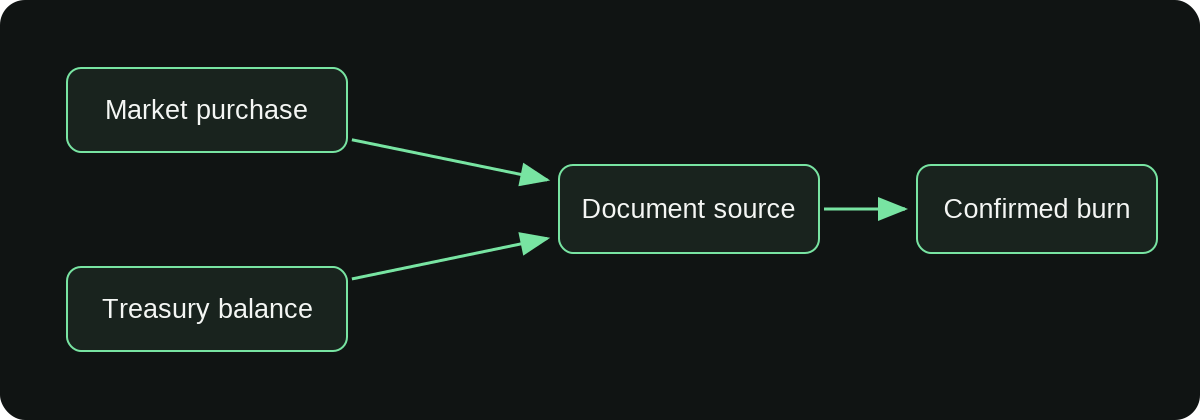
For each burn you want in the model, write down its coverage period, execution timestamp, quantity and funding source where available. Mark which evidence confirms the destination on the relevant chain. Keep a separate assessment of unlocks or other changes to tokens that could actually trade. If a monthly data point cannot be confirmed, the gap belongs in the series as unverified. An older published schedule cannot establish that a specific November 2026 removal occurred.
A trading benefit is worth what you actually use
To see whether an exchange perk might generate demand, first identify the scheme available under the entity and terms that apply to the account. Then compare fees for transactions you already expect to make. The calculation is eligible trading volume multiplied by the actual change in the fee rate, adjusted for any related costs. If the offer depends on holding KCS, compare the resulting savings with the possible loss in the token position and the cost of unwinding it. Fees charged in different assets should be compared in the same currency and at similar times. KuCoin's KCS overview
This exercise helps separate how a platform describes a benefit from how much demand it can generate. A trader who uses the service regularly may value a reduction. A customer who rarely trades might find the same holding requirement expensive relative to savings. For a broader outlook, look for evidence that actively used benefits persist across account groups and regions. Venue access, product availability and legal entity are separate considerations and can change. Check the current service and regulator records relevant to the reader.
KuCoin's November VIP campaign was scheduled for November 16–30 UTC. It included opportunities to win KCS as part of trading challenges. A month containing a promotion can be useful for checking whether a benefit reaches a trading audience. For evidence of lasting demand, compare eligible activity and balances during the campaign with comparable periods afterwards. Separate token prizes distributed to participants from tokens participants independently chose to retain or buy. KuCoin's November VIP campaign terms
A second check is how much of an apparent fee reduction depends on first raising trading volume. Use the volumes you would have traded in the ordinary course. Promotional turnover can raise aggregate figures while saying little about willingness to pay for the same utility once the campaign ends.
What would need to change in the book?
| 2027 KCS sensitivity | Move from $5.95 | At 150M circulating KCS |
|---|---|---|
| $3.50 | −41% | $525 million |
| $7.00 | +18% | $1.05 billion |
| $10.00 | +68% | $1.50 billion |
The low case tests weaker exchange usage, more constrained access or shallow spot bids. The middle case allows ordinary trading demand and stable access. The higher case requires evidence of sustained demand for KCS benefits, documented supply changes and deeper markets at prices near the target. None of those outcomes carries an assigned probability. At the same $1.5 billion valuation, a circulating estimate of 160 million KCS gives $9.375 per token. CoinGecko KCS market and supply data
A particular plumbing issue matters for exchange tokens. When the primary venue's bids thin, holders may need another route where the pair, deposit network and withdrawal support all match. Cross-venue displayed turnover can't tell you if that route is practical at your size. Compare live bids for the same order size and confirm whether funds can be moved between markets while the quotes are relevant.
Use four observations at the next review
Capture the first available ask and bid, the average bid for a realistic sell size, the applicable token benefit and the latest verified supply event. Take the samples at several ordinary times and mark any special event. Useful context includes whether the venue was accessible and whether the quote could be settled to an asset the reader actually uses. Quotes with a slightly different timestamp, different stablecoin or regional configuration can lead to different realized amounts.
If active incentives change, recalculate expected fees on the same representative trades. If a market gets deeper, note whether buyers can consistently place and settle orders on more than one route. If a supply event takes place, check whether it removed balances previously available to trade. These checks can support different conclusions at the same time. Bitget Token and verified burn inputs
Frequently asked questions
What if the ticker appears on more than one chain? Match the network and token representation to the current deposit instructions. A quote for the asset offers no assurance about the network accepted at that wallet address.
Does a KCS holder have shareholder rights in KuCoin? Shareholder rights would require a separate legal instrument. KCS utility and any account benefits are governed by the relevant product terms.
Can I use a KCS futures quote to estimate the proceeds of a spot sale? Futures can trade at a premium or discount to spot. Use the spot order book and fee schedule for the sale you would actually place.