 Coin Price Analysis
FF would need to gain about 93% from its November 23, 2026 UTC close of $0.103720 to reach $0.20. That would imply a $720 million valuation at 3.6 billion circulating tokens, or $1 billion at 5 billion. A larger USDf business would strengthen the case only if you can trace part of the activity to actual demand for FF. CoinGecko Falcon Finance price history · Falcon’s FF documentation
Test 1. Identify the token the customer actually uses
Falcon has several instruments with different jobs. USDf is an overcollateralized synthetic dollar. Users can deposit USDf into a vault to get sUSDf, a token whose value in USDf can change as the vault accrues returns. FF is the governance and incentives token. Falcon also documents sFF as the token users receive when staking FF. Deposits into the sUSDf vault and staking FF are separate activities, even when they appear next to each other in an app. Falcon’s USDf FAQ · sUSDf vault mechanics · sFF documentation
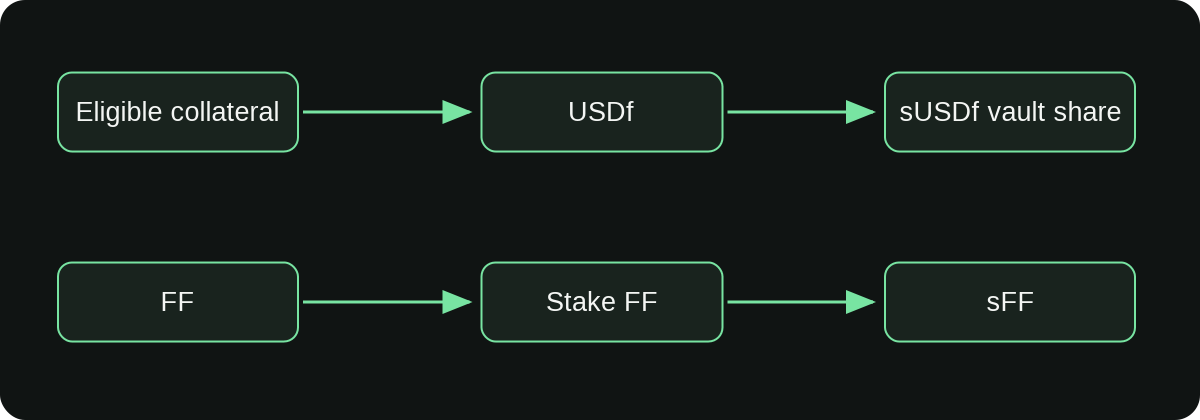
Read Falcon’s list of FF benefits as a set of claims to test. The documentation describes such potential benefits as better staking terms, lower collateral requirements for some minting and swap discounts. Check availability, eligibility and whether users actually choose to obtain FF for the benefit. The sFF governance page describes some governance functionality as forthcoming. A feature’s appearance in the documentation cannot establish its production use. FF utility documentation · sFF governance status
Test 2. Ask what supports USDf during stress
Falcon’s September recap, dated October 1, described adding KGST to a USDf mint route. It also reported that the largest reserve exposures in the cited snapshot were BTC, enzoBTC and mBTC. An additional eligible asset can broaden the ways customers enter the system. It says little about how concentrated outstanding exposure remains, which assets can be sold quickly, or whether hedges behave as intended. Before using aggregate USDf growth as an upside catalyst, check whether reserve composition and risk management changed across the same dates. Falcon’s dated September update
The protocol documents trading strategies used to support USDf’s peg and an insurance fund intended as an additional buffer. Read those separately from a current backing statement. A buffer can reduce a specific stress exposure without covering every simultaneous loss. For an evidence review, record collateral concentration, the assets actually available to meet redemptions, and any published changes in hedge or custody arrangements. If an asset appears twice in different wrappers, avoid treating those wrappers as independent sources of diversification until you know what backs them. USDf peg mechanics · Falcon insurance fund
Test 3. Reprice FF using more than one circulating figure
Falcon publishes distinct allocations for ecosystem programs, its foundation, contributors and other recipients. A token allocation is an ownership or budget category. Circulation depends on release conditions, transfers and the provider’s definition. Use the separately dated floating supply for your horizon. The two rounded inputs below illustrate the difference, with no claim that 5 billion must circulate by December 2027. Falcon’s tokenomics
| FF sensitivity | Move from $0.103720 | At 3.6B circulating | At 5B circulating |
|---|---|---|---|
| $0.06 | −42% | $216 million | $300 million |
| $0.12 | +16% | $432 million | $600 million |
| $0.20 | +93% | $720 million | $1 billion |
At a fixed $432 million valuation, 5 billion circulating would imply $0.0864 per FF. That comparison isolates supply. The market value itself can change. A move toward $0.20 needs a credible explanation for the larger valuation, along with enough accessible spot liquidity for actual trades near the quote.
To update the forecast, choose a dated set of indicators. Look for an increase in FF balances acquired for utility, sFF deposits that persist after incentives change, and a separately documented improvement in USDf’s use or liquidity. Keep gross staking deposits distinct from net FF still locked after withdrawals. If all you can observe is USDf growing, record that as product evidence. Leave the token link open until a rule and actual activity support it.
A useful follow-up is to measure the cost of using an FF-linked benefit. For a documented fee discount, compare the amount a customer would save over a normal period with the amount of FF they need to hold and any cost of acquiring or exiting that position. Record whether the benefit applies to the product the customer actually uses. An effective discount on one route does not establish willingness to hold FF among customers using another route.
Establish a starting date for the same cohort where the observations permit it. Watch how many participants retain their balances after a reward event. If the balance falls as the incentive ends, distinguish withdrawals from sales. Moving FF from a contract to a wallet changes where tokens sit. A sale requires its own evidence. Use the date of the program change and compare the behaviour with similar periods in the same markets.
For a practical sanity check, flip the valuation question. Take the market value you can defend and divide by each circulation estimate. That makes the trade-off explicit when you debate a dollar level alongside a faster release schedule. If the only positive data is a higher USDf balance, keep it in the product column while you wait for an independently measured FF event.
Frequently asked questions
Can I replace FF with USDf in a price comparison? They serve different purposes and use different market quotes. FF faces floating token prices. The USDf analysis centers on its dollar target, collateral and exit route.
Does a bigger sUSDf balance guarantee a higher yield? The number of vault shares held and the yield on those shares are separate. Check the exchange rate, timing and applicable conditions for the specific vault.
How do I handle FF moving between supported chains in a supply table? Identify the official token on each chain and reconcile any lock-and-mint or burn-and-mint mechanism before adding balances. Falcon’s official contract list