 Coin Price Analysis
XLM would need to rise about 85% from its November 23, 2026 UTC close of $0.130061 to reach $0.24. CoinGecko displayed $0.1301 on November 24 as an interim quote. The case depends on whether growth in settlement and smart contract activity translates into recurring use of XLM and enough market liquidity to support higher prices. Stablecoin transfers can grow faster than the XLM balances needed to run them. CoinGecko Stellar price history
Bell has an observable protocol check
The Stellar Development Foundation scheduled the Bell, Protocol 30 mainnet vote for November 23, 2026 at 17:00 UTC. The cited Foundation sources establish the schedule. The forecast does not depend on a confirmed first mainnet ledger for Protocol 30. The guide describes SDK changes and a new ledger header format relevant to services that decode raw data. Read the scheduled vote, the active protocol on mainnet and application support as separate observations. A wallet or payment service may need to support a new feature before its users can benefit from it even after the protocol is active. Stellar Bell upgrade guide · Stellar protocol upgrade schedule
To check an activation date directly, look at the protocol version on consecutive closed ledgers around the scheduled time. Record their close times in UTC and compare them with the vote schedule. This gives the analysis a network-level observation instead of treating an SDK release as activation. For application adoption, record the product update or documented use of the feature, and then find evidence of repeat operations after that change.
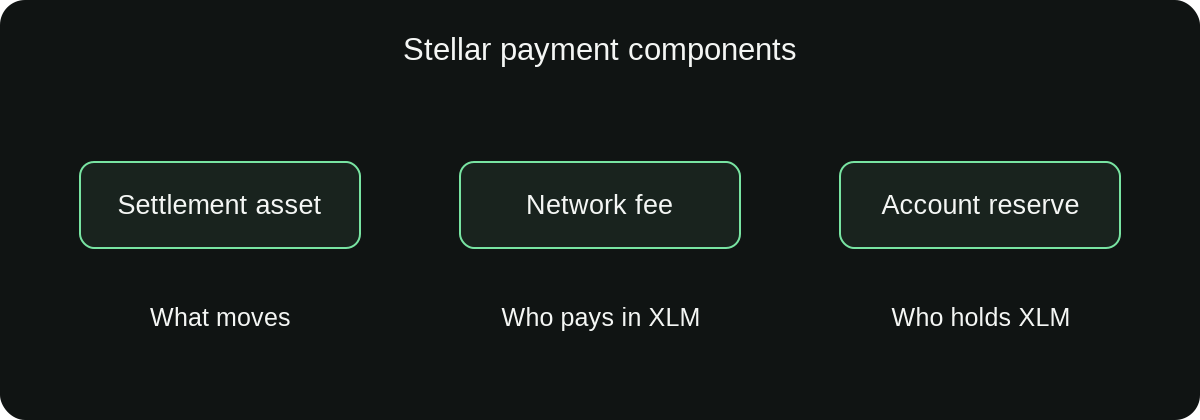
Put asset volume and XLM demand on different lines
A payment on Stellar may transfer a stablecoin as its principal. The transaction fee and applicable account reserve requirements use XLM. An operator can sponsor some obligations, so the number of end customers may differ considerably from the number of parties holding XLM to operate the service. To measure the effect on XLM, track fees actually paid, recurring operating balances and any demand related to liquidity or settlement in XLM itself. Stellar fees and resource limits · Stellar accounts and minimum balances
For a product comparison, follow one route this quarter and the next. Record the total stablecoin settled and who paid the XLM network charge. If a service maintains reserves on behalf of customers, record the operating entity's funded balances where observable. If orders use XLM as a bridge asset, distinguish amounts converted and immediately settled from inventory that market makers retain in order to serve those trades. USD Coin liquidity and redemption context
A $0.24 price needs a bigger valuation base
| 2027 XLM sensitivity | Change from $0.130061 | At 36B circulating XLM |
|---|---|---|
| $0.075 | −42% | $2.70 billion |
| $0.160 | +23% | $5.76 billion |
| $0.240 | +85% | $8.64 billion |
The 36 billion basis is illustrative. At 39 billion circulating and the same $8.64 billion valuation, the calculation gives about $0.222 per XLM. The lower case allows weaker demand and thin markets. The middle case allows improved settlement use and moderate growth in recurring operating balances. The higher scenario would take more evidence that stablecoin services or Soroban applications need meaningfully more XLM, plus usable spot depth over time. Stellar market and supply reference
Check user outcomes alongside network totals
For a cross-border payment service, compare the total time from initiating a payment to the recipient actually receiving usable value. An improvement at the blockchain layer can reduce part of the process. Fiat entry, redemption and wallet support can also account for much of the wait. Record which stage changed and whether the improvement persists outside a launch window. Compare the same route, currencies and amount so a change in the service mix does not dominate the result.
For Soroban activity, check which application actions need execution and who pays for them. Recurring fees across several products carry more information than one deployment that runs many testing operations. When public data only show network-wide totals, label the limits of attribution instead of assuming one announced project accounted for the change.
Put a date on each type of network evidence
Use a short record with distinct dates for the validator vote, the first ledger where the feature can be used, and the first production release of an app using it. For a service that already runs on Stellar, check the release notes for the change the customer would notice. A wallet update may support new address formats or transaction construction before users conduct any meaningful volume with it. Distinguish compatibility from economically significant usage.
A concrete follow-up for the XLM forecast is to check whether recurring balances follow recurring users. If a provider sponsors accounts, compare funds committed by the sponsor over time with retained customer activity. If the same reserves can support substantially more usage, user growth may outrun token demand. If the network often handles applications with materially different resource costs, compare their fees in native units by application where possible. These observations provide a way to test whether more use actually corresponds to more XLM demanded.
For market interpretation, match the time of the quoted XLM price with the relevant settlement and fee observations. A payment provider may publish monthly results, while a market move occurs in minutes. Use a comparable period to discuss adoption and use the intraday quote only for that moment's pricing. If the fee data don't cover the same period or if traffic is concentrated in an exchange transfer, leave the connection as a hypothesis. This makes a subsequent review more useful than attributing the next large move to the latest upgrade headline.
Frequently asked questions
Can Stellar users receive a stablecoin without buying XLM themselves? Some products arrange fees or reserves for users. The user experience depends on which obligations the service sponsors and how it handles withdrawal.
Why might a Stellar deposit require a memo? A receiving service may use a memo or another identifier to credit transfers made to a shared address. Follow the service's exact deposit instructions for the asset.
Can I measure remittance cost using the XLM gas fee alone? Include the route's foreign-exchange spread, service charges and recipient payout fees where applicable. The network charge is only one component.