 Coin Price Analysis
VET would need to rise about 107% from its November 23, 2026 UTC close of $0.00483977 to reach $0.01. At 82 billion circulating tokens that price implies about $820 million in market value. Since VeChainThor uses VTHO for gas, increased transaction activity needs a separate explanation before it supports a higher VET price. CoinGecko VET price history · VeChain’s VTHO documentation
Keep the two-token model in view
VET supports participation in staking. VTHO pays for execution on VeChainThor. VeChain’s documentation describes Hayabusa as replacing automatic VTHO generation from simply holding VET with a system tied to active staking. That changes the interpretation of older tutorials that assume every VET balance generates a fixed amount of VTHO. For a 2027 model, use the rules applicable to the position and verify which token a customer, application or operator needs. VeChain’s VTHO economic model · StarGate and Hayabusa FAQ
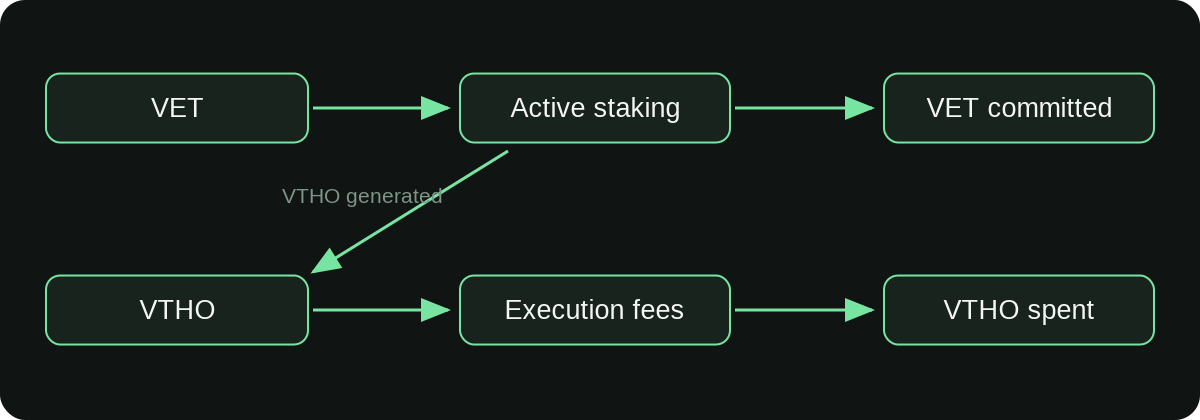
Record VET committed to staking separately from VTHO generated, spent and burned under the current rules. An increase in VTHO fees describes demand for execution. A separate observation is needed to show more VET being acquired or retained to participate in consensus. If an app sponsors gas, end users can act without acquiring either token themselves. Identify what its sponsor pays and whether the requirement is recurring.
Which upgrade is live, and what does it show?
The Interstellar release specifies VeChainThor’s September 2026 mainnet fork at block 25,902,540. The project describes the upgrade as adopting compatible features from Ethereum’s Cancun, Prague and Osaka releases under VIP-255. The November 5 v2.5.1 release describes maintenance and hardening without activating a protocol fork. An evaluation of developer adoption should distinguish the fork, subsequent client maintenance and application deployments that make use of the new capabilities. VeChainThor release history · VIP-255 specification
For a check after the upgrade, track named applications with measurable activity across several periods. A supported opcode or deployment option can enable a new use case. Evidence of adoption comes from users submitting transactions that continue after a launch or subsidy period. Even then, fee expenditure per transaction can change because of different contracts or gas prices. Preserve these distinctions before treating a spike in transactions as proof of higher token demand.
Translate a price target into the value it needs
| VET sensitivity | From $0.00483977 | Implied value at 82B VET |
|---|---|---|
| $0.003 | −38% | $246 million |
| $0.006 | +24% | $492 million |
| $0.010 | +107% | $820 million |
The 82 billion assumption is a rounded input. The lower case reflects weak recurring use or thin spot bids. The middle case allows for growth without assuming that the larger part of it feeds through to VET. The upper case needs sustained fee activity plus better evidence that a growing set of participants wants or needs to maintain VET positions. To rerun the calculation, multiply the chosen price by a fresh circulation estimate. A valuation and the cash needed for a specific trade are separate. CoinGecko VET market data
A practical review can compare net VET entering staking, the amount of VTHO used for actual execution and order depth over matching periods. When dollar-denominated fees rise, compare the VTHO units behind the jump. An increase in its exchange price can change the dollar result while use stays flat. If more staking and more paid activity occur together, test which process links the two instead of treating their coincidence as enough evidence.
Set a baseline for the two balances
Look at VTHO generated through active staking and VTHO spent during a matched period. When possible, add the amount taken out of supply through the relevant fee mechanism. Those figures help explain changes in availability, although the distribution across participants matters as well. Then separately track the VET positions participating in consensus. A rise in VTHO paid by applications may create a more visible incentive to participate, but the link depends on actual reward and cost conditions. VeChain dual-token economic model
For an enterprise use case, identify the ongoing activity rather than just counting signed partners. A tracking application can publish records in batches. One announcement can precede a long implementation period, and the amount paid by the application can change with batching. Use a comparable set of contracts and separate physical events reported by the business from transactions included by the network. A company running many events through one account should not be treated as that many independent buyers.
Before revisiting the price targets, preserve the denominators for each series. A very small daily fee base can produce a large percentage increase without changing much recurring expenditure. A supply calculation for VET should also stay distinct from what can be bought on thin spot markets. Report both the observation and why it matters before raising the price case. This lets a later update revise the claim if activity grows but the economics for VET participants do not.
If the fee system changes, preserve the date and the active version beside each amount. Compare like-for-like workload where possible, since a different contract or batch size can change resource consumption without any change in the number of customers using the service.
Frequently asked questions
Does buying VET mean I can pay a VeChainThor gas fee in VET? The network’s gas token is VTHO. An app may cover that cost for users under a separate arrangement.
Can an application’s transactions increase without an increase in VTHO spent? It can happen if the transaction mix or net cost per operation changes. Check aggregate resource use and fees together.
Do Ethereum execution-layer improvements turn VET into ETH? Compatibility updates affect what applications can run. They do not change the identity of the native asset or how that asset is priced.