 Coin Price Analysis
PI would need to rise about 109% from its November 23, 2026 UTC close of $0.057549 to reach $0.12. CoinGecko's November 24 page displayed an interim quote of $0.05718. At 13 billion circulating PI, an illustrative input, twelve cents implies a market value of $1.56 billion. The case depends on how much Mainnet PI becomes available and whether people have reasons to acquire and use it after they receive it. CoinGecko Pi Network price history
First check which Pi balance you can use
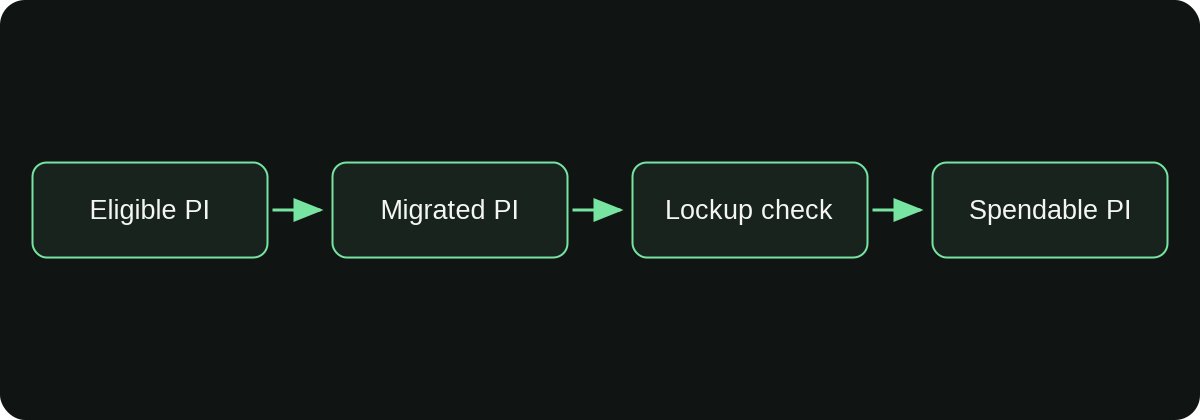
A Pi balance can be displayed in the app before it is transferable on Mainnet. A user may have to complete the required checks, migrate the eligible amount and wait for any applicable lockup before using it. For a price estimate, identify the balance that is both on Mainnet and available for the intended transaction. A portfolio estimate based on the full balance displayed in an app can imply more immediate value than the owner can realize. Pi Network Mainnet migration information
The project says the second migration rollout can bring an additional transferable balance to Mainnet, including eligible referral bonuses attributable to referral team members who fully passed identity verification. First migrations continue separately. One completed migration account can carry more coins than another. Covering more accounts tells you the process advanced, while the unlocked spendable quantity is the more relevant starting point for a supply model. Pi Network second migration announcement
What the November summit tells us
Pi's November 17–18 Ecosystem Summit presented developer tooling and technical demonstrations. In its first-day update, the project announced a November 19 start for the Pi Next hackathon with a 200,000 USDT prize pool. The prize was denominated in USDT. Treat it as an ecosystem development expense when measuring activity. A demo can establish that a payment workflow exists. A later series of successful purchases gives better evidence that users have a continuing reason to hold and spend PI. Pi Network summit opening update · Pi Network day-two update
Choose an app with a clear product and distinguish cancelled, refunded and completed payments if those records are available. Then ask how often customers return outside promotional windows, whether sellers accept further payments, and what happens to PI after a merchant is paid. A seller who spends the proceeds in the same ecosystem contributes a different kind of demand from one who immediately converts every sale. Public totals may capture transaction counts or gross proceeds without showing those choices. Say which measure you use and what remains unobserved.
Put a supply estimate under every target
| 2027 price test | Change from $0.057549 | Implied value at 13B PI |
|---|---|---|
| $0.030 | −48% | $390 million |
| $0.075 | +30% | $975 million |
| $0.120 | +109% | $1.56 billion |
The three prices represent sensitivities without assigned probabilities. The $0.03 case tests a market where newly available coins and thin demand make sales harder to absorb. At $0.075, app use and trading could improve without a broad change in market participation. At $0.12, the case needs better repeat payment activity and resilient spot liquidity. The number of completed migrations gives some context in all three cases, but it should be paired with evidence about how much actually became available.
At the same $1.56 billion valuation, 15 billion circulating PI would imply $0.104 per coin. This adjustment isolates a difference in supply instead of assuming a single forecast for migration and lockup releases. Update the denominator if a later circulation estimate conflicts with the scenario. Save both the date and the definition. Total balances, migrated balances, available balances and exchange inventory can all follow different paths. CoinGecko circulating supply and market reference
What to update when migration accelerates
Choose a reporting interval, then compare the increase in spendable balance with the average amount actually sold within the depth you can observe. If the project reports migration counts but publishes no comparable quantity of unlocked PI, leave that change unquantified. You can still record a milestone and adjust the supply assumption in both directions. Where a wallet or explorer labels a lockup, use its status at a specific date rather than an undated screenshot.
If application data become stronger at the same time as supply rises, calculate the implied market value again. Higher utility could coincide with a lower unit price if the supply denominator grows faster than the market's valuation. A useful review documents both movements instead of treating the first available supply number as permanent.
How to value a balance you actually intend to sell
Use an accessible venue's live bid for the amount you can move, then include trading and withdrawal costs. Check the asset and the deposit network before relying on a quote. A venue with temporarily unavailable deposits can display prices for the inventory already there even if your wallet balance cannot reach that book. If there is a lockup, value the currently transferable amount as its own item and record the unlock date for the rest. This produces a useful estimate of current proceeds and preserves the information needed to revisit the longer-term position.
For a market-level check, keep one log for spot depth and another for application usage. Compare similar times of day and include a period outside a major announcement. Sustained bids and repeat payments can both improve while market access varies by location. That combination is more informative than applying a price seen in one thin market to every balance in the network.
Frequently asked questions
Is a historical PI IOU chart suitable as a Mainnet price series? Use markets with the same underlying asset and settlement terms. Before combining data, confirm the venue's migration from any older instrument and how the provider recorded it.
Does every Pi account complete verification on the same schedule? The project describes a gradual process and specific exceptions. Use the status in the official checklist for the account you are assessing. Pi Network KYC and migration update
Can a merchant's price in PI be compared directly with the global PI quote? Convert the same item and time to a common currency. Merchant prices can also reflect discounts, delivery charges and local exchange conditions.