 Coin Price Analysis
Midnight Network's NIGHT would need to gain about 109% from its November 23, 2026 UTC close of $0.04792478 to reach $0.10. Midnight moved its mainnet to Ledger 9 on November 6. The 2027 case depends on whether live applications, demand for DUST capacity and market liquidity develop as more NIGHT becomes available to trade. Correct CoinGecko NIGHT history · Midnight network release notes
The two NIGHT quotes are for different assets
On November 24, CoinGecko's Midnight Network listing displayed about $0.04895 with the day's close field unpopulated. Its separate listing at the unnumbered Midnight URL displayed about $0.000004859. They differ by roughly 10,000 times. For the price analysis below, the dated anchor is the preceding completed row on the Midnight Network listing. The separate same-ticker market has its own price and market history. Midnight Network listing and history · Separate ticker listing
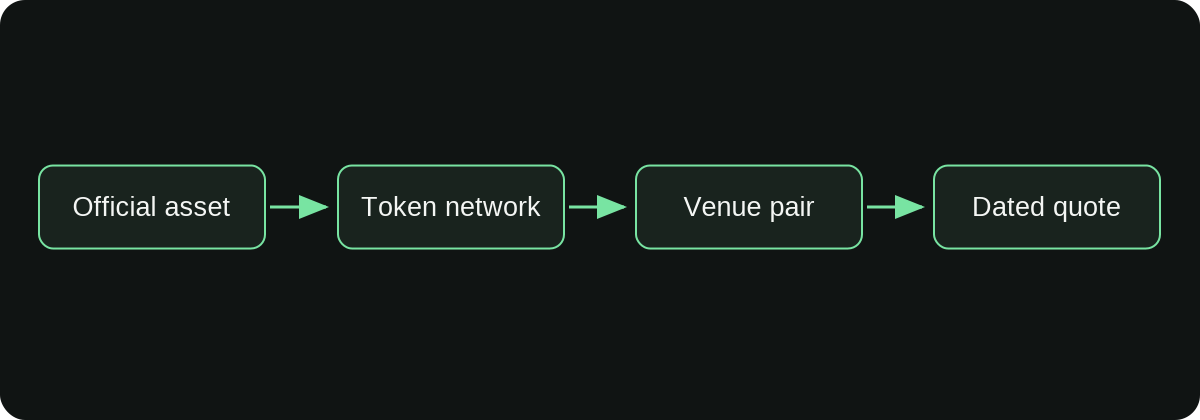
To compare quotes, start with Midnight's official project and token information, identify the asset and network at the trading venue, and check the deposit or withdrawal asset details. Then find the correct listing at the data provider. Treat a similar name, plausible market-cap label or search result that exactly matches the ticker as a lead. For an order, check that the quote asset and trading pair also match what you intend. A real discrepancy in quotes for the same asset requires a separate check of time, market depth and transfer restrictions. Midnight NIGHT launch and redemption guide
What Ledger 9 added and how DUST fits
Midnight says it moved its mainnet to Ledger 9 on November 6, introducing signature support and composable contracts. Those changes extend what developers can build. They do not tell you how many production applications are used each day or whether new demand will survive an incentive period. For a 2027 valuation, look for several live workflows with repeat users and a clear reason for using the network. Privately verifiable facts can be particularly useful when they attest to a working application without exposing user data. Midnight Ledger 9 announcement
The network uses DUST as a resource for transaction fees, and NIGHT can be used to generate DUST under the network's rules. Ask who provides capacity in an application. An operator may arrange the capacity users need, which makes user accounts and direct NIGHT holders different populations. Record who holds the NIGHT associated with the DUST capacity and whether its requirements grow as activity increases. A useful forecast follows that link alongside the count of active applications. Midnight DUST fee documentation
Read the release schedule in stages
Midnight's July 9 update said Glacier Drop redemptions resumed and the pause had left the original redemption schedule intact. Distinguish between an amount becoming eligible for redemption, an amount actually redeemed, and an amount credited to trading venues. Those statuses help answer different questions about supply. Aggregate public estimates can also update on different schedules, particularly around a redemption window. Midnight Glacier Drop redemption update
Build a record with a date, scheduled eligible amount where known, redeemed balance from a source you can verify and any independently observed circulation change. Keep some room for missing data. A redemption can move NIGHT into self-custody without increasing the visible sell orders on a venue. Checking the bid depth near a price level adds context where a supply chart ends.
Three ways to size the 2027 market
| NIGHT price case | Move from $0.04792478 | Implied value at 18B circulating |
|---|---|---|
| $0.025 | −48% | $450 million |
| $0.055 | +15% | $990 million |
| $0.100 | +109% | $1.80 billion |
The supply of 18 billion is an illustrative input. At the same $1.8 billion valuation, a circulating supply of 20 billion would imply $0.09 per NIGHT. The lower case tests weak market depth and slow application usage. The middle outcome allows measured uptake while holders absorb new availability. The higher case calls for sustained demand and stronger evidence that operating applications need more capacity. It also requires buyers to absorb additional circulating supply if the denominator increases. Midnight Network market data
Update the worksheet when a meaningful supply report changes the denominator or when new applications show repeat use. Keep a dated copy of the input data so historical changes in your view can be explained by evidence.
How to test for rising DUST demand without counting every registration
Choose one public application with a stable workflow and read its documentation on fee sponsorship. Check whether the operator pays for execution or users supply their own capacity. If the application publishes operating metrics, look for repeated completed actions over several comparable weeks. Record whether more actions imply more DUST used and whether additional capacity would require the operator or its users to dedicate more NIGHT. A growing number of accounts tells you little about that relationship if each account rarely acts or capacity is ample.
A sponsored rollout is still evidence about usability. Its financial significance depends on continuation. If the company sponsor publishes a usage total, note the exact period and any promotional window before comparing it with figures from another operator. Also record what the metric counts, such as instructions submitted, successful executions or unique active accounts. Combining those categories can exaggerate growth. A first month with many test transactions may establish that a service works, while later windows reveal whether it has retained users. Midnight reference on sponsoring transactions
Separately, check the pair's ability to take the size of trade you want during ordinary hours. If quotes jump around after a redemption event, the timing may help identify a period to examine. Dated order and settlement data would still be needed to attribute the move to redemptions.
Frequently asked questions
Is there one market-wide NIGHT closing price? Data services aggregate different venues and can use different daily boundaries. Use the same source and UTC convention when comparing changes across dates.
Can an application's private transactions make adoption harder to measure? Yes. Public evidence may be limited to aggregate operating metrics or attestations. Use clearly described measures and distinguish them from estimates of unseen activity.
Does DUST have the same dollar quote as NIGHT? A NIGHT spot quote prices NIGHT. DUST has a separate role under Midnight's transaction model, so the quote cannot be applied to it.