 Coin Price Analysis
DASH would need to rise about 83% from its November 23, 2026 UTC close of $35.46 to reach $65. CoinGecko's November 24 snapshot was $35.41. The higher case needs evidence that people keep using DASH to settle payments or fund applications, alongside spot liquidity capable of supporting the higher valuation. Version changes show what developers can build or operate. The amount customers actually use is a separate measurement. CoinGecko DASH price history
Platform 5.0 has a release and an activation process
Dash's October 20 Platform 5.0 announcement outlined an October 26 mainnet release and a conditional activation path for protocol version 14. The timetable depended on EvoNode signalling and the boundaries of network epochs. Check the release record and the active protocol before treating the planned dates as final. A repository can also show previews for later versions, so select the release for the exact feature you are assessing. Dash Platform 5.0 release plan · Dash Platform tagged releases
For a demand assessment, follow one application through deployment and use. A testnet contract can show that the author built a working feature. A documented production launch establishes availability. After launch, the most useful observations are returning users, paid activity and the DASH or credits needed to sustain it. Avoid treating a dramatic upgrade title as evidence that all the apps using it had a successful rollout.
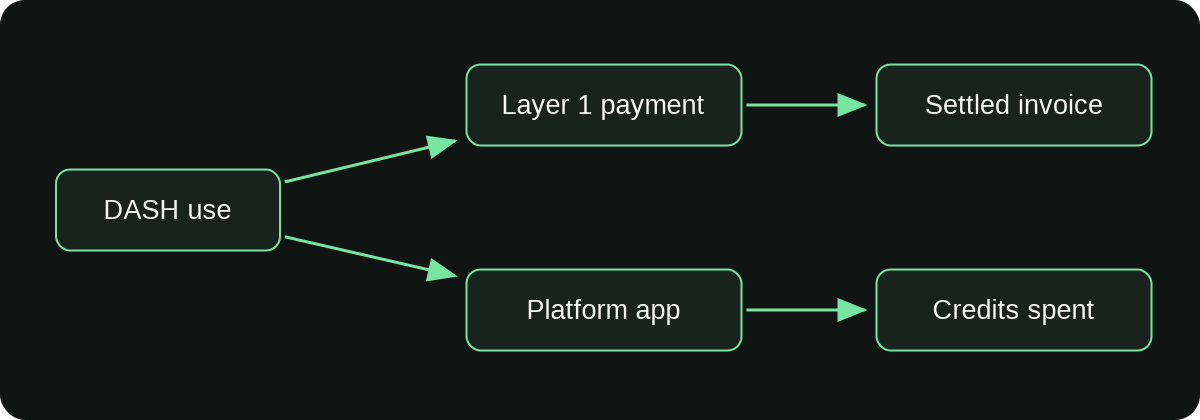
Measure Layer 1 payments and Platform activity separately
A merchant payment is best measured by completed settlement and repeat purchases in a known window. Raw transactions can include change outputs, exchange movements or settlement by intermediaries. An application may use Platform credits for operations, so raw actions or identity registrations cannot automatically be translated into DASH demand. Use the applicable conversion and funding records when they can be verified, and distinguish who paid from who performed an action. Dash Platform protocol constants · Dash Platform identities
Layer 1 settlement also has its own operating evidence. Dash documents ChainLocks as part of its network design. A receiving exchange or merchant separately sets the time at which a transfer becomes usable. Capture first confirmation and usable credit as separate timestamps when measuring payment experience. This can explain why someone might choose a payment route even if the spot price and the typical network block interval remain similar. Dash ChainLocks reference
What $65 would ask of the market
| DASH price tested for 2027 | From $35.46 | At 13.2M circulating DASH |
|---|---|---|
| $20 | −44% | $264 million |
| $42 | +18% | $554.4 million |
| $65 | +83% | $858 million |
The 13.2 million input is illustrative. At the same $858 million valuation with 13.6 million circulating units, the price would be about $63.09. The $20 case tests reduced liquidity or weak adoption. The $42 case allows steady use and moderate improvement in execution. A persistent $65 price would be easier to defend with several comparable periods of stronger payments or credit-funded application activity and wider venue depth. The price inputs have no assigned odds. CoinGecko DASH market and supply data
Keep network collateral distinct from market float
Dash's documentation describes collateral for masternode participation. An operator retaining collateral has an economic reason to hold the asset, with terms specific to the role. The collateral's operational status can be relevant to an estimate of readily available supply, but treatment of those balances can vary by data provider. Track eligibility and active participation if you use those inputs. Avoid applying a broad subtraction to circulating supply without identifying how your source already classifies the balances. Dash masternode documentation
A useful quarterly review records payment evidence, application activity, network participation and market quotes in separate fields. Read them over comparable dates. If DASH rises with peers while payment statistics remain steady, the market move can have a broader explanation. If a new app produces observable usage without improving trading depth, represent those as two separate findings. Bitcoin Cash payments and settlement comparison
Check whether activity is broad or concentrated
Look at one area over several weeks and record how many observations depend on the same payment processor or application. A large processor can generate valid payment traffic that provides powerful evidence about a single business. It cannot establish that the network has diversified adoption. Where customer counts are available, compare the number of recurring merchants with the total settled amount. This helps distinguish a higher average payment size from a larger number of businesses repeating the activity.
For Platform, check whether the usage measure counts account or app creation, reads, writes or committed credits. State which actions actually spend credits under the documented rules. If a team publishes results from a trial that funded users' fees, record that information and return to the series after the subsidy changes. The number of users returning and the amount of externally funded activity are useful even if a perfect mapping to DASH inventory is unavailable.
Set an explicit threshold for revisiting a price case. A data revision that materially changes assumed circulation warrants recalculating the price at the same valuation. A change in fees or demand from multiple identifiable applications may justify revisiting the valuation input itself. Keeping the steps in that order makes the next update comparable to this one.
Finally, compare prices for a practical order size and settlement asset. If two quotes diverge, first check whether deposits are enabled and whether a reported price is from the bid or the last trade. If applicable, add conversion costs. The best headline percentage gain and the best executable price can come from different markets.
Frequently asked questions
Does a DASH market rally raise Platform fees in the same proportion? Check which fees or funding requirements are denominated in credits or DASH and how the conversion works. A dollar price change and a network fee change can be different events.
Does a Dash wallet automatically give holders masternode rights? Ordinary possession does not satisfy the particular collateral, configuration and participation rules described in the masternode documentation.
Can a payment processor's merchant list establish sales volume? A list shows possible acceptance. To estimate activity, look for completed invoices or an explicitly reported value of settlements in a stated period.