 Coin Price Analysis
AVAX’s 2027 outlook hinges on the activity that creates sustained AVAX demand. CoinGecko’s November 23, 2026 UTC close was $6.78. $4, $8 and $12 are rounded year-end sensitivity levels. The $12 scenario is roughly 77% above the reference close. To support that kind of repricing, a stronger case would need more evidence than an increasing count of Avalanche L1s. CoinGecko AVAX price history
A forecast should specify which network is growing
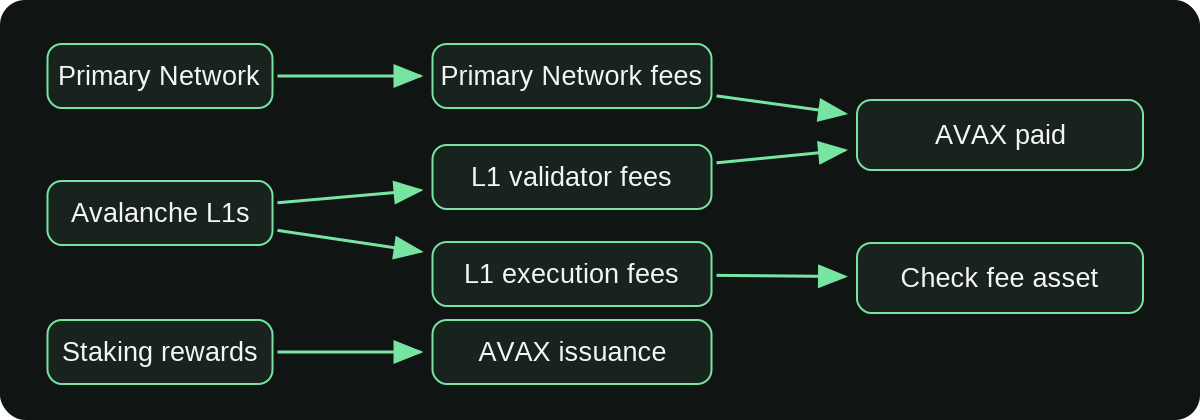
Avalanche’s architecture includes its Primary Network and separately operated Avalanche L1s. A rise in activity on one chain does not establish that users spent the same amount of AVAX in another. Before connecting an adoption headline to price, identify the chain, its gas asset and whether AVAX is required for a particular validator or protocol-level payment. If the application uses another asset for execution, its transaction count alone is insufficient to infer AVAX burn. Avalanche tokenomics FAQ · Avalanche Builder Hub
That test changes the interpretation of a new L1. A launch can be noteworthy for Avalanche even while its immediate effect on AVAX remains small or unverified. Start with a comparison of documented payment obligations and observed activity. Then check whether usage persists after onboarding incentives end. A growing ecosystem can improve available services while its token’s market valuation moves for other reasons.
There is a useful distinction within Avalanche L1 economics. Under ACP-77, an L1 validator on the continuous-fee model incurs an AVAX-denominated charge for the time it remains active. The fee is dynamic, and an application’s user transaction count does not directly set that validator’s obligation. Start by checking paying validator activity. Then check the execution asset and fees users actually pay on that chain. Those are separate observations even when they rise together. Avalanche ACP-77 specification
For a quarterly comparison, look for a repeatable path from an announcement to a measurable change. A newly public L1 may move the launch count immediately, while a smaller existing network that keeps validators active can create a different pattern of demand over time. If the data does not cover all chains, keep the missing observations visible and compare only the portion for which matching records exist. Record whether your active-validator total is a snapshot or an average. A snapshot taken at the end of a campaign can misrepresent the rest of the quarter.
What Helicon adds to the watch list
AvalancheGo’s official release history schedules Helicon mainnet activation for September 22, 2026 and lists a subsequent November 5, 2026 API cleanup release. The technical changes described in the Helicon material include continuous execution and auto-renewed staking. These are development milestones. A valuation model should test how they affect observable use, instead of booking a price premium when a new client version is published. AvalancheGo releases · Helicon technical overview
Track what the change was meant to improve. For an application, compare performance and repeat use over matching periods. For staking, check the protocol terms and the supply changes that follow, keeping issuance separate from amounts already held. If you find a reassuring benchmark, identify whether it came from test infrastructure or live production. Adoption depends on the client, application and user experience in addition to protocol-level capability.
Three year-end sensitivity cases
| AVAX level | Change from $6.78 | Conditions that would support the case |
|---|---|---|
| $4 | −41.0% | Weak market demand, with new activity failing to create measurable recurring AVAX requirements. |
| $8 | +18.0% | A modest recovery with verified use, while the balance of fee demand and issuance remains mixed. |
| $12 | +77.0% | Sustained use in relevant paid activity, clearer evidence of demand for AVAX and deeper spot execution. |
The percentage is calculated as the scenario level divided by $6.78, minus one. These points have no assigned probabilities. Treat them as a scale check. If you prefer implied valuations, multiply each by the same rounding convention for circulation and date. Do not use a supply cap as the current circulating amount. If the circulating figure changes, the price implied by a fixed market value changes too.
A measurement sheet for comparing two quarters
Use four columns for a specific observation: chain, fee asset, AVAX-specific requirement and verified measurement. For Primary Network fees, look at the requested time window and applicable burn. For activity on an L1, identify which charges actually create AVAX demand. Keep staking issuance separate. On the market side, record executable spot quotes under the same order size. That allows you to distinguish new users from a change in token economics.
The November 20 close was $6.51, versus $6.78 on November 23 in the same UTC series, a gain of roughly 4.1%. The levels are descriptive. Their usefulness comes from having a clear date and common source. They do not establish that Helicon drove the move or that the available liquidity has improved. If price recovered alongside weaker execution conditions, the investment interpretation would be different from a recovery with better depth. CoinGecko AVAX price history
If AVAX-denominated fees rise, note whose costs increased. A change driven by the number of paying validators may persist under different conditions than one caused by higher usage of a particular application. That distinction helps determine which metric to watch if fees later fall. It also reduces the chance of calling value capture stronger based on gas paid in another asset.
Frequently asked questions
Why can two charts show different changes for AVAX on the same day? Check the venue, quote asset and cutoff. A 24-hour rolling comparison and a comparison of completed UTC closes can produce different results.
Does a staking reward improve a price target by the same percentage? Price and rewards are separate. Position return also depends on terms, token price, fees and access to the stake.
Can an AVAX limit order at one of these levels guarantee a fill? Execution depends on available liquidity, order priority and whether that specific venue trades through your level.